Hot Mess Momma
☕ Grab your coffee (or your protein shake), friend. Let's talk.
(Not an official medical diagnosis... but honestly, maybe it should be.)
Meet Linda. Linda is 38 years old.
She's got kids involved in approximately 47 sports and activities, works full time, somehow remembers spirit week, signs permission slips five minutes before they're due, and keeps everyone alive on caffeine, determination, and a prayer.
She's also trying to be "healthy."
Social media has convinced her she needs to:
- Lift weights.
- Do HIIT... but not too much HIIT.
- Walk 10,000 steps.
- Eat 150 grams of protein.
- Fast for 16 hours.
- Sleep 8 hours.
- Cold plunge.
- Sauna.
- Take 37 supplements.
- Drink electrolytes.
- Heal her gut.
- Reduce cortisol.
- Meditate.
- Journal.
- Manifest.
- And apparently survive on cottage cheese and chia seeds.
So she does. And... nothing.
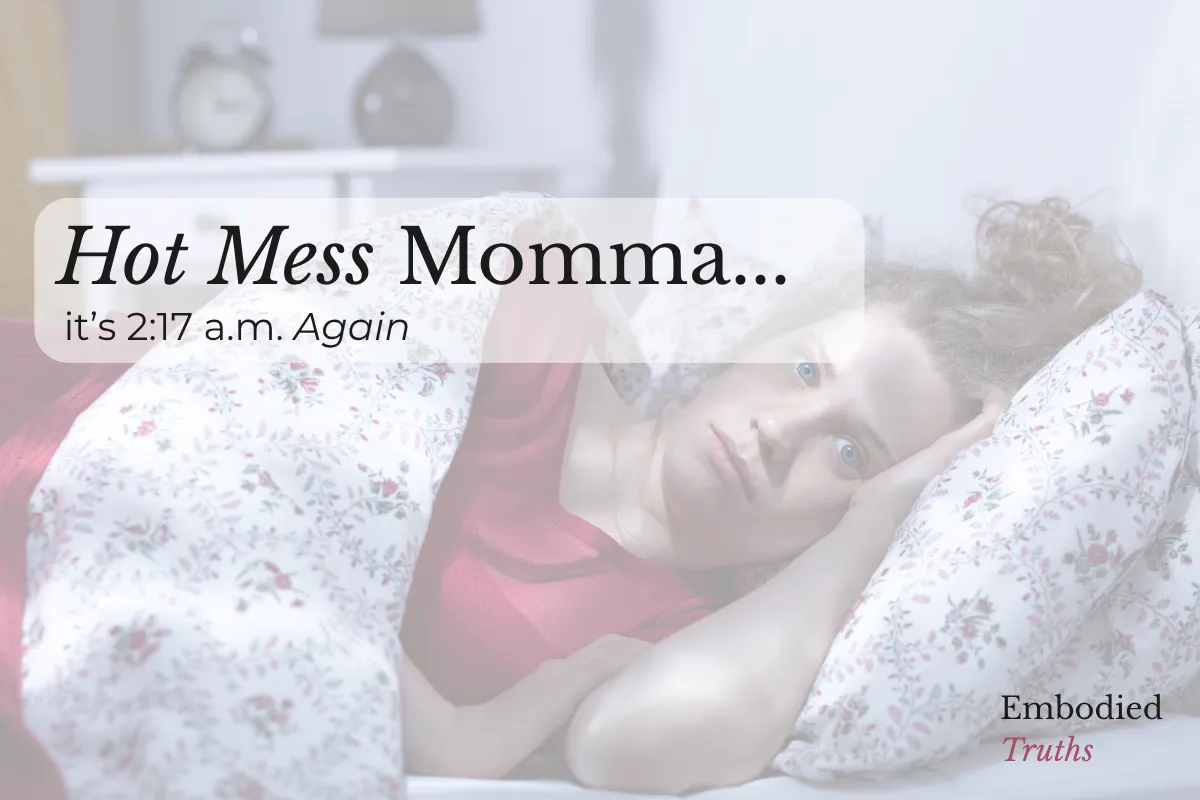
The scale won't budge. She's exhausted. She can't fall asleep... and when she finally does, her brain decides 2:17 AM is the perfect time to replay that embarrassing thing she said in seventh grade.
She snaps at everyone. Her husband somehow becomes irritating simply by existing. She cries over commercials. Her skin feels like sandpaper. Her hair is thinning. Sex? Let's just say the Sahara Desert has more moisture.
She's anxious. She's overwhelmed. She doesn't recognize herself anymore.
And she starts wondering...
"Am I losing my mind?"
Probably not. There's a good chance your hormones are simply changing.
Welcome to Perimenopause
This is the stage that nobody prepares women for.
It's not menopause. It's the 5-10 (sometimes longer) years leading up to menopause, when your hormones start acting like toddlers who skipped their naps.
One month everything seems okay. The next month? Not so much.
One of the first hormones to become inconsistent is progesterone.
Progesterone is produced after ovulation, and as ovulation becomes less predictable in our 30s and 40s, progesterone often takes the first hit.
I jokingly call it our "calm-the-chaos hormone."
It supports:
- Sleep
- Mood
- Anxiety
- A sense of calm
- Healthy menstrual cycles
When progesterone declines, many women notice they can't shut their brain off at night.
Sound familiar?
Meanwhile, estrogen may still be present—but it often fluctuates dramatically. Some months it's high. Some months it's low. Your body loves balance, and during perimenopause... balance can become pretty elusive.
Then comes testosterone.
Cue the record scratch.
Yes, women make testosterone too. And no, it doesn't make you grow a beard overnight.
Testosterone plays an important role in women by supporting:
- Motivation
- Energy
- Libido
- Lean muscle mass
- Bone strength
- Brain function
- Confidence
- Recovery from exercise
I jokingly call it the "get stuff done" hormone.
Because when it's optimized (for the right patient), women often stop feeling like they're just surviving the day and start feeling like themselves again.
Then Linda goes to the doctor...
She says, "I can't sleep." "I'm anxious." "I'm exhausted." "I don't feel like myself."
Sometimes she's told, "Your labs are normal." Or, "You're just stressed."
Or she may be offered medication for anxiety or sleep—which can absolutely be the right treatment for many women.
Let me be very clear: There is zero shame in taking anxiety medication or sleep medication when it's appropriate. Those medications can be life-changing.
But if these symptoms seem to appear out of nowhere during your late 30s or 40s, they deserve a deeper conversation.
Because sometimes the question isn't, "What's wrong with you?" It's, "What's changing?"
Linda found answers.
She learned she was in perimenopause. She started progesterone. She finally slept through the night.
Then, after a comprehensive evaluation, testosterone was added because it was appropriate for her.
About eight weeks later... She laughed more. She had energy again. She felt motivated. She wasn't just getting through the day.
She felt like Linda again.
Here's what I want every woman to know.
You are not lazy. You are not crazy. You are not failing. And you certainly are not "just getting older."
Sometimes your body is simply asking for support during a season of tremendous hormonal change.
As women, we often become the center of our households. We manage the schedules. We carry the mental load. We take care of everyone else before ourselves.
But here's the truth... When the woman at the center of the home is running on empty, everyone feels it.
Taking care of yourself isn't selfish. It's one of the greatest gifts you can give your family. Because the healthiest version of you benefits everyone around you.
Let's stop accepting "this is just part of getting older." Let's start asking better questions.
XOXO,
Brittany
Let's Live Embodied.
Brittany's Bottom Line
Perimenopause isn't a disease, but it can dramatically impact how you feel. If you're struggling with sleep, mood, energy, libido, or feeling like you've lost yourself, don't assume it's "just stress" or "just aging." There are answers—and you deserve to know what they are.
Treatment is individualized and may include lifestyle changes, nutrition, stress management, hormone therapy when appropriate, or other medical approaches depending on the person.
The information in this blog is for educational purposes only and is not intended as medical advice, diagnosis, or treatment. Always consult your own healthcare provider before making changes to your health regimen. Embody Wellness Clinic accepts patients who are residents of Kansas.